Address
Growworks, Khond Arcade,
Aundh, Pune, 411007
Work Hours
Monday to Friday: 7AM - 7PM
Weekend: 11AM - 5PM

Address
Growworks, Khond Arcade,
Aundh, Pune, 411007
Work Hours
Monday to Friday: 7AM - 7PM
Weekend: 11AM - 5PM


A practical guide for women-led businesses in India to understand GeM Womaniya, prepare for seller onboarding, list products and pursue government procurement opportunities.
If your business can supply products or services reliably, selling to government buyers may be a market worth exploring. For women entrepreneurs in India, the GeM Womaniya initiative is designed to improve access for women-led micro and small enterprises (MSEs) and Self-Help Groups (SHGs) through the Government e-Marketplace.
The opportunity is not just theoretical. Government reporting for FY 2025–26 says more than 2.1 lakh women-led MSEs were registered on GeM, with around 13.7 lakh orders and contract value exceeding ₹28,000 crore. The reported contract value grew 27.6% over the previous financial year. These are platform-wide figures, not a promise of orders or earnings for any individual seller. Read the official PIB explainer on Womaniya.
This guide explains what the initiative does, who should investigate it, what to prepare before registering, and how to turn a seller account into a realistic business-development plan.
The Government e-Marketplace (GeM) is India’s digital public-procurement platform. Government departments, public-sector organisations and other eligible public buyers use it to procure goods and services through digital processes.
Launched in January 2019, Womaniya is an inclusion-focused initiative within GeM intended to help women-led MSEs and SHGs reach government buyers. It improves the visibility of eligible sellers and brings selected product categories into curated storefronts that buyers can discover. The broader GeM platform also supports procurement of many other products and services, subject to its category and bid requirements. GeM’s seven-year Womaniya update describes the programme’s development and public-procurement role.
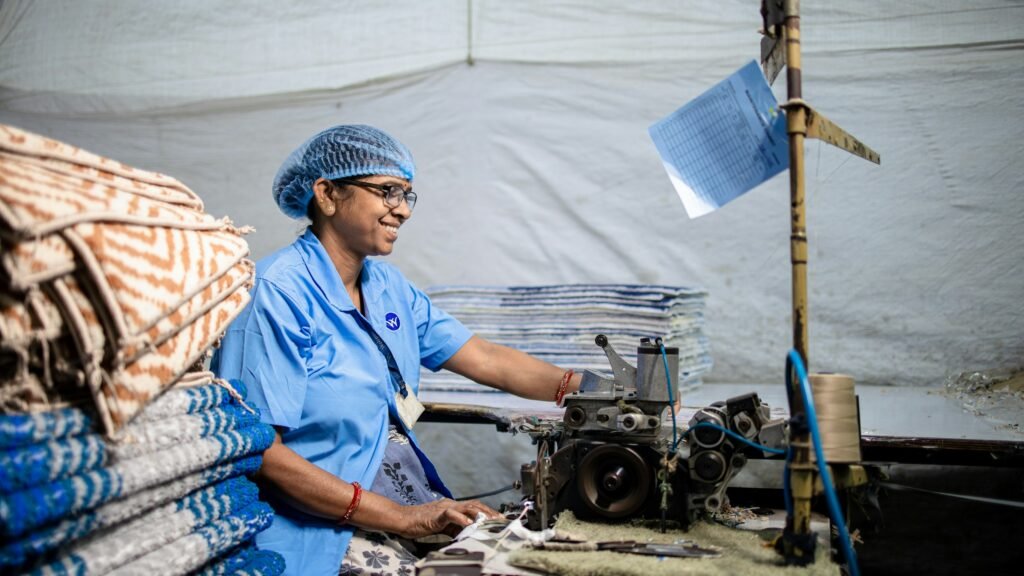
The figures reported for FY 2025–26 indicate meaningful activity: more than 2.1 lakh women-led MSEs, about 13.7 lakh orders and over ₹28,000 crore in awarded contract value. The government also reported that women-led enterprises accounted for 5.6% of GeM’s total order value, above the stated 3% procurement target. Source: Press Information Bureau.
For a small business, the attraction is access to a formal buyer channel beyond walk-in customers, social media enquiries or local distributors. Depending on the product, service, eligibility and tender conditions, GeM may help a business discover demand from public institutions across India.
Keep the numbers in perspective. They describe the initiative as a whole. Registration does not guarantee a contract, a minimum order volume, faster growth or a particular payment date. A seller still needs a competitive offer, accurate product information, the capacity to fulfil orders and compliance with the relevant procurement terms.
The initiative is especially relevant to women-led MSEs and SHGs that already make products or are preparing to supply them at a consistent standard. Examples of businesses that may wish to investigate the relevant categories include:
GeM’s published Womaniya categories include handicrafts, grocery and pantry, office accessories, handloom textiles, and personal hygiene and care. Category availability and catalogue requirements can change, so confirm the live options on the official marketplace before investing in packaging, certification or inventory. Explore Womaniya listings on GeM.
If your business primarily sells services, check the regular GeM service categories and their conditions. Do not assume every service is part of the curated Womaniya storefront or that all categories have identical eligibility rules.
Before opening an account, decide exactly what you can supply. Government procurement is not simply another online shop: specifications, delivery commitments, documentation and bid conditions matter.
Write down:
Do not quote a price until you have accounted for the complete cost of fulfilling the order. A contract that increases sales but loses money on every unit is not a healthy growth strategy.
GeM’s published description says women-led MSEs are onboarded using Udyam verification and essential documentation. If your enterprise is not registered as an MSME, review the official Udyam process and the current eligibility criteria before starting.
The Ministry of MSME’s official Udyam Registration portal states that registration is online, paperless and free. It also warns that private services are not authorised to carry out MSME registration on the government’s behalf. The information required depends on the type of entity, and PAN/GST details are used where applicable.
Use the official portal only. Be cautious of websites or agents that imply they are the government registration portal or demand a fee for the Udyam registration itself. If you already have a Udyam certificate, check that your business details are current and consistent with your other records.
Keep your business information organised before you begin the current GeM seller-registration flow. Depending on your entity type and the products, services or bids you pursue, the portal may ask for details such as:
This is a preparation checklist, not a guarantee that these are the only documents required. Requirements can vary by entity, category, procurement mode and current portal rules. Follow the live instructions on the official GeM website and consult GeM’s official training material if you need help with the seller journey.
Start from the official GeM website and choose the seller or service-provider registration route available to your business. Complete the requested organisation and authorised-person details, then follow the verification steps shown by the portal.
As part of the process, make sure the business information you provide is accurate. If the enterprise is women-led, review how its details are verified for the relevant MSE or SHG route. Do not invent ownership information or submit inconsistent records to qualify for an initiative.
The interface and onboarding process may change. If a page is unavailable or the portal requests an unfamiliar document, use the help and training links published by GeM rather than relying on an unofficial website promising approval.
A buyer should be able to understand exactly what you offer without guessing. Prepare clear product titles, accurate specifications, usable photographs, pack sizes, quantities, applicable standards and realistic delivery details. Keep descriptions factual and avoid claims you cannot substantiate.
Use the relevant GeM category and catalogue attributes rather than placing an item in a loosely related category simply to gain visibility. Compare your product’s quality and total delivered cost with competing offers, but do not underprice below a sustainable margin.
For a service business, describe the scope, deliverables, service locations, staffing or technical requirements and any qualifications the relevant category asks for. A well-organised catalogue makes your offer easier to evaluate, but it does not replace any tender-specific eligibility requirements.
After onboarding and listing, regularly review the relevant categories and procurement opportunities. Some purchases may follow catalogue-based processes; others may require a bid or reverse auction. Read the current requirements for each opportunity rather than assuming the process is the same for every order.
Before participating, check:
GeM’s official training material includes seller and procurement learning resources. The government also announced a pilot for 50 GeM Suvidha Kendras in selected States and Union Territories to support seller registration, catalogue creation, capacity building and grievance redressal. Check whether a centre is operating in your area before travelling; the pilot does not mean a centre is available in every district. See the PIB’s GeM overview published in August 2026.
Select one or two products or services that your business can supply reliably. Calculate a realistic price and document your production or delivery capacity.
Review Udyam status, entity details, tax information where applicable, banking details and any product-specific documents. Resolve inconsistencies before beginning registration.
Search the official GeM catalogue for relevant categories and compare specifications, buyer requirements and competing offers. Use official training resources to understand the seller journey.
Decide whether the channel fits your business. If the margins, delivery capacity or compliance requirements do not work yet, improve those areas before pursuing an order. If the fit is strong, complete the current registration steps and create a careful plan for catalogue quality, opportunity tracking and fulfilment.
Womaniya is designed to improve participation by women-led MSEs and SHGs. GeM as a whole serves a broader range of eligible sellers and service providers. Check the current requirements for your entity and the specific route you plan to use.
Yes. The official Ministry of MSME portal states that Udyam registration is free and paperless. Use the official portal rather than a private site claiming to be the government registration service.
No. Orders depend on buyer demand, category fit, pricing, technical compliance, competition, capacity and the procurement method. Treat GeM as a sales channel to develop, not guaranteed income.
A home-based business should assess whether it meets the relevant MSME and GeM requirements and can fulfil the chosen category’s specifications, documentation and delivery obligations. Business size alone does not remove the need to meet procurement conditions.
For women entrepreneurs in India, GeM Womaniya is worth investigating if the business has a clear offer, reliable fulfilment and the documentation required for its category. The recent government figures show that women-led MSEs are already participating at significant scale, but the practical work still lies in choosing the right category, preparing a competitive catalogue, pricing sustainably and meeting contract terms.
Start small, verify every requirement on official portals, and pursue opportunities that make commercial sense. A government marketplace can become one part of a wider sales strategy; it should not be the only plan on which your business depends.
Official sources and useful links
